


All Products
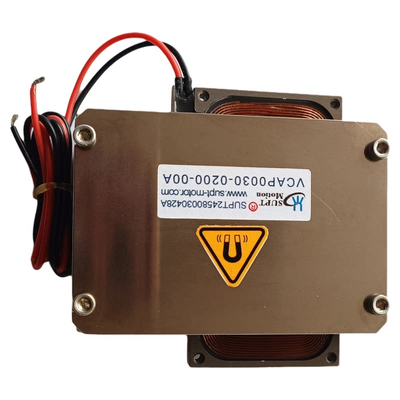
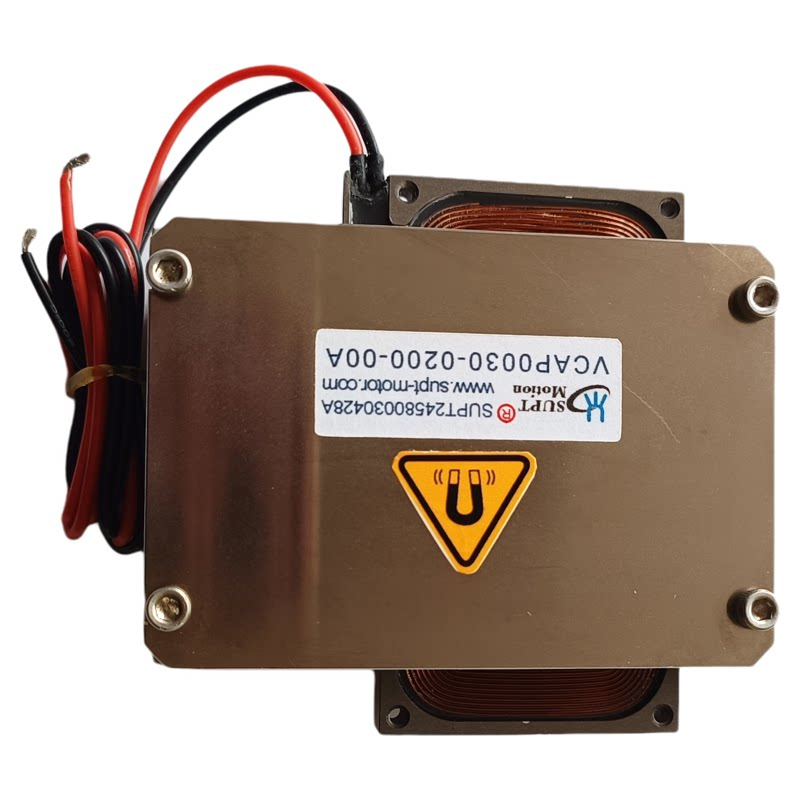
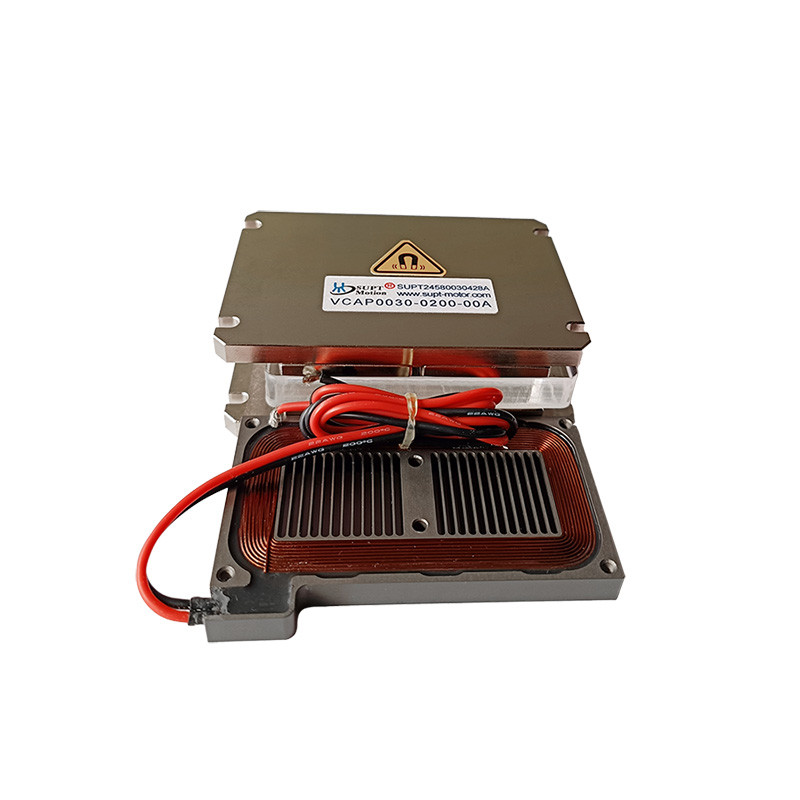
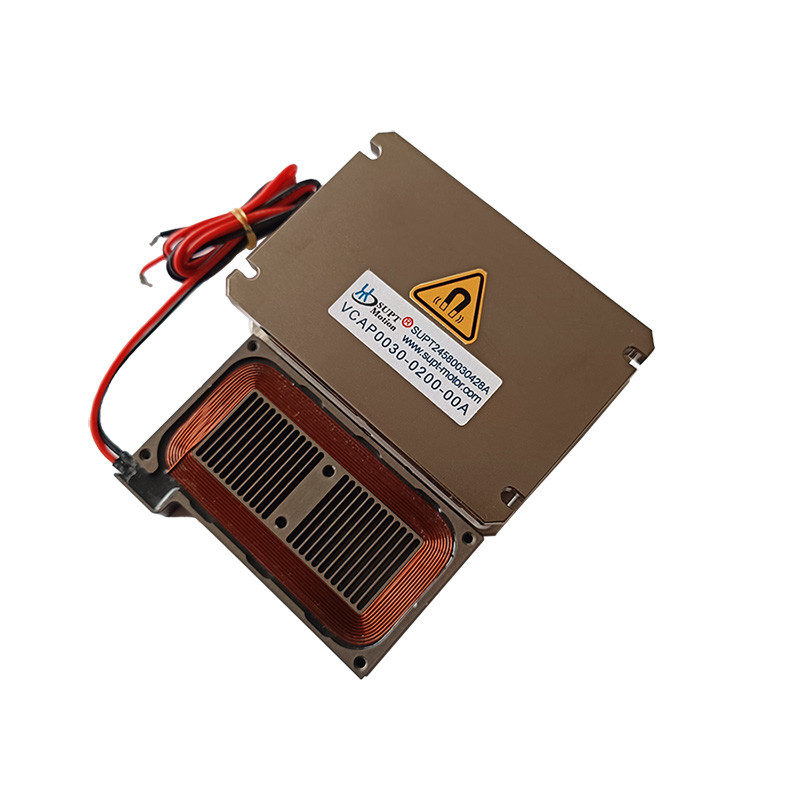
30N High Frequency Planar Voice Coil Actuator for SMT Dispenser Jetting
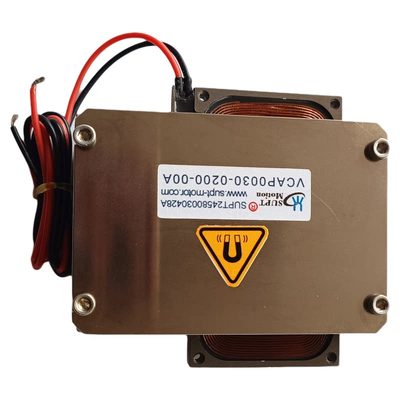
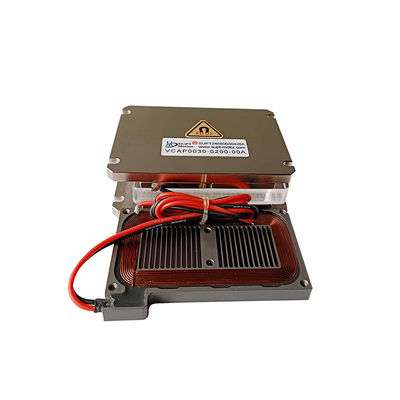
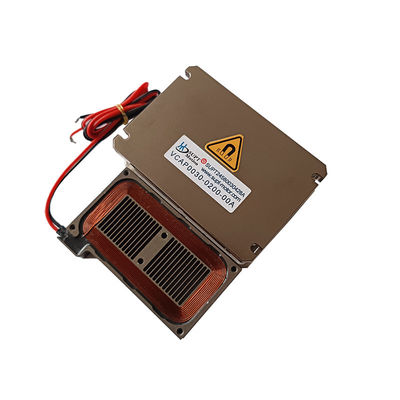
| Place of Origin | Suzhou, Jiangsu, China |
|---|---|
| Brand Name | SUPT MOTION |
| Certification | ISO 9001:2015, CE |
| Model Number | VCAP0030-0200-00A |
| Minimum Order Quantity | 1 Piece |
| Price | USD 210-280 / Piece |
| Packaging Details | Cleanroom bag, ESD safe tray, shock absorbing foam, export carton with desiccant |
| Delivery Time | 5-7 working days for samples, 18-25 working days for batch orders |
| Payment Terms | T/T |
| Supply Ability | 350 Pieces per Month |
Product Details
| Model | VCAP0030-0200-00A | Axis Role | Dispenser Needle Or Jet Valve |
|---|---|---|---|
| Peak Force | 30 N | Continuous Force At 25C | 12.3 N |
| Total Stroke | 20 Mm | Max Voltage | 24.3 V |
| Back EMF Constant | 10.5 V/m/s | Body Size | 80 X 74 X 25 Mm |
| Force Mode | Ramp, Dwell And Release | Cycle Rate | Up To Several Hundred Dots Per Second |
| Typical Application | Underfill, Encapsulation, Solder Paste Jetting | ||
| Highlight | 30N planar voice coil actuator,high frequency SMT jetting actuator,voice coil actuator for dispenser |
||
Product Description
Product Overview
Flat-type voice-coil motor stator coils are lightweight, with short response times and high frequencies. The flat-type series is ideal for generating short-stroke X-Y motion, and its market is primarily targeted at the semiconductor and micro-machining industries. The VCAP0030-0200-00A is used to drive dispensing heads in semiconductor assembly lines; it can serve either as the Z-axis for the needle of a contact-type dispenser or as the moving element of a jet valve. At 25°C, this actuator delivers a peak force of 30 N and a continuous force of 12.3 N over a 20 mm stroke; it operates at a maximum voltage of 24.3 V, with a back-EMF constant of 10.5 V/m/s, and has dimensions of 80 × 74 × 25 mm. It is precisely because of the long stroke that the flat voice-coil motor model is used here: it can lift the needle away from tall components and avoid baffles and filler walls without the need for a second pneumatic axis.
Solution
Dispensing quality is determined by two parameters: the gap between the needle and the substrate, and the dwell time at that gap; both are matters of force and velocity, rather than purely a positioning issue. As the pneumatic printhead approaches the substrate at a fixed speed and pressure, any height variation in the substrate or slight warping of the panel will alter the gap, thereby causing the droplet diameter to vary. When using a voice coil drive, the nozzle descends along a force ramp: once the nozzle makes contact with the surface, the coil current gradually increases as the gap narrows; the controller maintains a preset contact force during the dwell period, thereby ensuring that the droplet volume remains stable on warped or component-mounted circuit boards. Due to the low mass of the moving parts, the same axis can also perform non-contact dispensing, whereby the valve piston is driven by short, high-acceleration pulses at several hundred hertz to form the dot whilst in flight. Underfill, wall fill, surface-mount adhesive and solder paste all benefit from this feature: repeatable volume, no stringing at the droplet release point, and current waveforms that provide early warning of partial nozzle blockages, thereby preventing the scrapping of entire panels. The 20-millimetre stroke also allows space for tall passive components and a blow-off station at the side of the work area.

Specifications
| Parameter | Value |
|---|---|
| Model | VCAP0030-0200-00A |
| Axis role | Dispenser needle Z axis or jet valve drive |
| Peak force | 30 N (intermittent) |
| Continuous force at 25°C | 12.3 N |
| Total stroke | 20 mm |
| Maximum voltage | 24.3 V |
| Back EMF constant | 10.5 V/m/s |
| Body size | 80 × 74 × 25 mm |
| Force mode | Programmable ramp, dwell and release |
| Cycle rate | Jet valve mode up to several hundred dots per second |
| Cleanroom | No lubricated sliding contact in the drive path |
| Cable | High flex lead wire with strain relief |
| Mounting | Four M4 threads on the base plate |
| Product Model | Peak Force (N) |
Continuous Force at 25℃(N) |
Total Stroke (mm) |
Max Voltage (V) |
Back EMF Constant (V/m/s) |
Length (mm) |
Width (mm) |
Height (mm) |
| VCAP0020-0068-00A | 20 | 5.5 | 6.8 | 8.2 | 4.4 | 39 | 50 | 21.5 |
| VCAP0020-0160-00A | 20 | 5.3 | 16 | 27.6 | 4.4 | 59 | 50 | 22.5 |
| VCAP0030-0200-00A | 30 | 12.3 | 20 | 24.3 | 10.5 | 80 | 74 | 25 |
| VCAP0100-0020-00A | 100 | 47 | 4 | 41.2 | 80.1 | 110 | 105 | 51 |
Application
Underfill and capillary flow dispensing, dam and fill encapsulation, die attach adhesive, solder paste and sinter paste jetting, thermal interface material placement, lid seal dispensing, and needle type dispensers on die bonders and SMT lines.
FAQ
Q: Can the same actuator run a contact needle and a jet valve?
A: Yes. In contact mode the coil holds a programmed force while the valve opens, and in jet mode the same coil is driven with short pulses. The difference is only the current profile stored in the controller.
Q: How is the gap to the substrate controlled?
A: Either by position from an encoder, or by force, which is more robust on warped panels. The coil reaches the commanded contact force regardless of board height and the deviation is visible in the current trace.
Q: Does the 20 mm stroke cost force compared with a shorter model?
A: Peak force is 30 N, which is ample for needle dispensing and jetting. If a shorter stroke with higher force is preferred, the 100 N model with 4 mm travel is available in the same family.
Q: How do I know when the nozzle is partially clogged?
A: Flow resistance raises the force needed for the same displacement. A trend of rising current at constant command, or a slower rise time, is the usual early warning.
Recommended Products